
Blog / Maintenance & Service

How Ford’s Power Stroke V8 Beats Winter Cold for Faster Heat and Performance

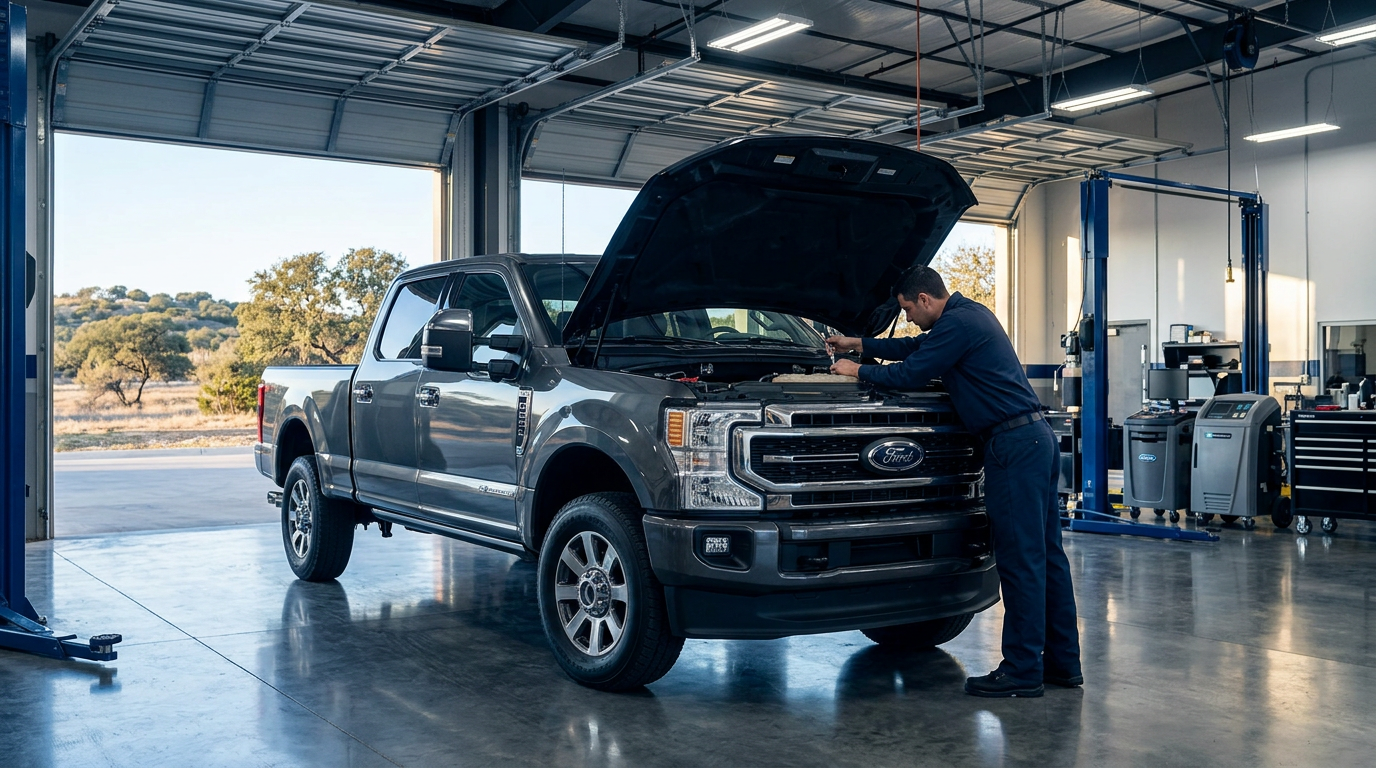
An auto mechanic leans over the open hood of a grey Ford Super Duty truck inside a bright repair shop. (Representative image for illustration purposes only. Actual vehicle may vary based on trim and configuration.)


The 6.7L Power Stroke V8 Turbo Diesel engine warms up faster in freezing weather than traditional inline-six diesel configurations because its V8 block design, ceramic glow plugs, and available electric supplemental cab heater rapidly transfer heat to both engine coolant and the passenger cabin. We sat down with our Service Advisor at Cecil Atkission Ford, who brings over a decade of specialized heavy-duty diesel experience, to discuss how truck owners can prepare their rigs for demanding cold-weather workloads.

Q: Which heavy-duty diesel engine warms up faster in freezing weather, and why does engine design make such a big difference when winter hits?

A: The V8 architecture of the 6.7L Power Stroke V8 Turbo Diesel holds an inherent physical advantage in warm-up speed over large inline-six engines when ambient temperatures drop below freezing. Because a V8 block distributes its mass into two compact cylinder banks rather than one long continuous cast-iron block, thermal energy from combustion concentrates quickly around the combustion chambers and coolant passages. Combined with high-tech ceramic glow plugs that reach operational temperature in a fraction of a second, the engine initiates clean, complete combustion almost immediately upon cranking.

In addition to engine geometry, Ford incorporates system-level thermal management that accelerates cabin heat. When you start a Super Duty in sub-zero weather, the available electric supplemental cab heater kicks in right away to warm the interior air before the engine coolant even reaches full operating temperature. That means you are not idling the truck for half an hour just to clear the windshield or make the cab comfortable. For drivers who need to hit the road early without wasting fuel or creating excessive cylinder wash, that quick thermal response is a massive advantage.

If you ever want to see how these thermal management systems operate firsthand or discuss cold-weather prep for your truck, you can get directions to our Hondo service center or give our team a quick call to speak directly with an expert.

Q: What essential maintenance should be performed on a Ford Super Duty diesel before winter hauling?

A: Winter places intense physical demands on every mechanical system in a diesel truck, so a comprehensive pre-winter inspection focuses on fluid chemistry, electrical capacity, and fuel delivery. Before hitching up a heavy trailer for winter work, the very first step is testing both heavy-duty batteries under load. Cold weather severely reduces battery chemical reaction speed while simultaneously requiring significantly more cranking amps to turn over cold engine oil.

Equally vital is switching your engine oil to a winter-grade lubricant. We recommend filling the crankcase with 5W-40 or 0W-40 full synthetic Motorcraft engine oil whenever ambient temperatures drop below 20 degrees Fahrenheit. The lower winter viscosity allows the oil to flow instantly to the turbocharger bearings and upper valvetrain during a cold start, preventing critical wear. We also inspect the cooling system to confirm proper antifreeze concentration, test the heating element in the engine block heater cord, and drain the Water-in-Fuel separator to ensure no moisture remains in the fuel housing to freeze.

"A single drop of trapped water frozen inside a fuel housing can stop a fifty-thousand-pound rig right in its tracks on a freezing morning."

Whether you rely on a single-rear-wheel new Ford Super Duty F-250 for daily property maintenance around Lakehills or pull heavy cattle trailers with new Ford heavy-duty trucks, keeping up with seasonal maintenance prevents costly roadside delays.

Q: How often should the fuel filters on a 6.7L Power Stroke diesel be replaced before winter?

A: Ford specifies replacing both diesel fuel filters every 15,000 to 22,500 miles under normal operating conditions, but changing them right before the first hard freeze is standard practice for experienced diesel owners. The 6.7L Power Stroke V8 Turbo Diesel uses a two-stage filtering system consisting of an under-hood secondary filter and a lower frame-mounted primary filter with an integrated water separator. Over time, microscopic contaminants and trace water collect in these filter media.

In freezing temperatures, untreated diesel fuel forms paraffin wax crystals that quickly clog an already dirty fuel filter, starving the high-pressure fuel pump and fuel injectors. Furthermore, any moisture trapped in the frame-mounted separator can freeze solid, causing severe restriction or cracking the filter housing. Replacing both filters ahead of winter guarantees maximum fuel flow and allows you to treat your fuel tank with a quality anti-gel additive that depresses the cold filter plugging point. Treating every fill-up with anti-gel prevents wax crystallization when temperatures plunge overnight.

Q: How long should you plug in the Ford Super Duty engine block heater before starting?

A: Plugging in the engine block heater for two to three hours prior to starting is all it takes to warm the block and coolant, even in sub-zero weather. Leaving the heater plugged in overnight is generally unnecessary and simply consumes extra electricity without providing any added thermal benefit. Using a heavy-duty outdoor electrical timer set to turn on three hours before your planned departure time is the most efficient strategy.

The block heater element warms the engine coolant inside the cylinder block, which reduces starter strain, minimizes glow plug wear, and allows the 6.7L Power Stroke V8 Turbo Diesel to reach peak operating temperature much faster after startup. It also provides immediate cabin heat and ensures optimal oil circulation through the turbocharger right from the moment the engine fires. Always inspect the block heater power cord for fraying, bent prongs, or corrosion before plugging it in for the season.

Q: How much does dual battery replacement cost for a Ford Super Duty?

A: Replacing both heavy-duty AGM batteries on a Ford Super Duty typically costs between $400 and $600, including original equipment parts and professional dealer installation. Because diesel engines operate with high compression ratios and rely on dual batteries connected in parallel to deliver high cold-cranking amps, replacing both batteries at the same time is essential. Installing one new battery alongside an old, degraded battery causes the stronger unit to drain into the weaker one, leading to premature failure of both batteries.

When you bring your truck to Cecil Atkission Ford, our factory-certified technicians test reserve capacity and conductance to confirm battery health before replacement. Installing genuine Motorcraft AGM batteries ensures full compatibility with the truck’s smart charging system, which recalibrates alternator output based on battery age and ambient temperature. If you prefer to handle replacement yourself or need replacement components for your fleet, you can easily order OEM Ford parts online through our dealership parts department.

Q: What towing technology features assist with winter trailer hauling on the Super Duty?

A: Ford equips the Super Duty with a suite of integrated towing technologies designed specifically to maintain stability and traction when hauling heavy loads on slick or icy surfaces. Standard integrated trailer brake control works directly with the truck's anti-lock braking and electronic stability control systems. If the truck detects trailer sway caused by crosswinds or slick road patches, the anti-sway software selectively applies individual truck and trailer brakes to settle the combination without jackknifing.

Advanced driver-assist features like Pro Trailer Hitch Assist, Smart Hitch, and Blind Spot Information System with Trailer Coverage take the stress out of winter towing. Smart Hitch calculates real-time tongue weight to ensure your trailer is balanced correctly before setting out on frozen roads, while Blind Spot Information System with Trailer Coverage monitors lanes along the full length of your trailer even when road grime obscures your side mirrors. For ranchers moving livestock or equipment across agricultural acreage in Dunlay, having precise weight feedback and automatic sway suppression provides invaluable confidence in unpredictable winter conditions.

Q: What is the difference between Auto and On modes for the Super Duty exhaust brake?

A: The smart exhaust brake on the 6.7L Power Stroke V8 Turbo Diesel offers two distinct operational modes—On and Auto—that change how the variable-geometry turbocharger restricts exhaust flow to slow the vehicle. In standard On mode, the exhaust brake engages fully the moment you lift your foot off the accelerator pedal. This mode delivers maximum continuous engine braking force, which is ideal for steep, dry mountain downgrades where you want aggressive, constant deceleration without riding the mechanical service brakes.

In Auto mode, the system operates intelligently by monitoring vehicle speed and brake pedal input. Auto mode modulates exhaust backpressure dynamically to hold your current cruise speed down a grade rather than slowing the truck aggressively the instant you lift off the gas. On slick or icy winter roads, Auto mode is significantly safer because it prevents sudden, harsh rear-wheel braking deceleration that could break tire traction on slippery pavement.

If you have additional questions about optimizing your truck's performance settings or need to schedule your pre-winter service check, drop by our Hondo service center or contact our service advisors at (830) 426-5391 to set up an appointment today.


© 2026 Cecil Atkission Ford. All rights reserved.

Posted in:

Related Posts

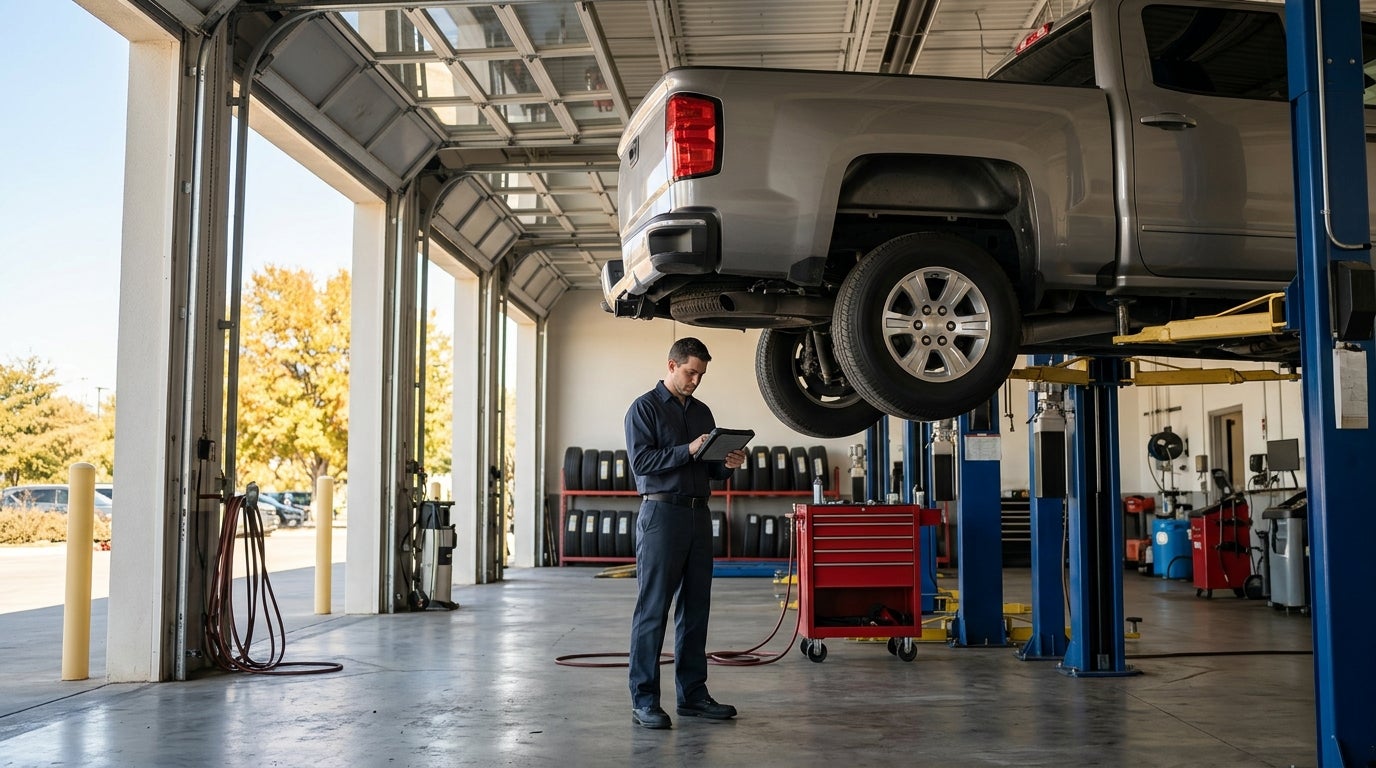
A mechanic in a dark blue uniform using a diagnostic tablet under a pickup truck raised on a hydraulic lift. (Representative image for illustration purposes only. Actual vehicle may vary based on trim and configuration.)

Ford Truck Service in Hondo: What Our Technicians Check on High-Mileage F-150s and Super Duty Trucks

What High-Mileage Maintenance Items Are Inspected on Ford F-150 and Super Duty Trucks? When a Ford F-150 or Super Duty reaches 100,000 miles, a comprehensive technician inspection focuses on primary wear points: ignition system components, cooling system hoses and water pumps, turbocharger oil lines, transmission fluid condition, differential and transfer case lubricants, steering ball joints, suspension bushings, and brake system integrity. Performing this thorough baseline check prevents major component failures under heavy towing or rural work conditions. As a Service Director at Cecil Atkission Ford with over 10 years of experience servicing trucks in South Texas, I see firsthand how heat, heavy loads, and rough country roads test truck engineering. On every high-mileage F-150 and Super Duty that enters our bay, our factory-certified technicians run a multi-point health check designed around Ford factory guidelines. We inspect the engine air filter, cabin air filter, drive belts, and battery cold-cranking amps before lifting the truck to check undercarriage components. Underneath the chassis, our technicians closely evaluate front and rear brake pads and rotors, driveline U-joints, and shocks or struts. For owners hauling heavy loads around Lakehills over limestone outcroppings and pasture trails, checking suspension sag and leaf spring shackles is essential to maintaining control. You can stop by our Hondo service center address or give our team a direct phone call to discuss your truck's mileage baseline. Table of Contents What Engine Components on EcoBoost F-150s Require Inspection After 100,000 Miles? How Often Should Transmission Fluid and Filters Be Replaced on High-Mileage Ford Super Duty Trucks? What Is the Recommended Maintenance Schedule for a Ford F-150 Past 100,000 Miles? What Suspension and Drivetrain Parts Wear Out First on Rural Roads? Does Regular Maintenance at a Dealership Preserve Ford Super Duty Trade-In Value? How Can Owners Contact the Local Ford Service Department for a High-Mileage Inspection? What Engine Components on EcoBoost F-150s Require Inspection After 100,000 Miles? Past 100,000 miles, EcoBoost engines require detailed inspection of spark plugs, ignition coil boots, turbocharger coolant and oil supply lines, intercooler connections, PCV valves, and intake valve assemblies to protect boost performance and fuel efficiency. On popular powertrains like the 2.7-liter EcoBoost V6 and 3.5-liter EcoBoost V6, spark plug wear happens faster than on naturally aspirated engines due to higher cylinder pressures under boost. Worn plug gaps increase voltage demand on ignition coils, which can trigger high-load misfires under heavy acceleration. Replacing spark plugs restores proper ignition gap and shields coils from premature failure. Our technicians also check turbocharger oil feed lines and cooling connections for seepage or carbon restriction. Inspecting the positive crankcase ventilation system ensures crankcase pressure stays balanced, preventing oil blow-by into the intake tract. If replacement components are required, using genuine Ford parts keeps boost levels aligned with factory standards. Owners needing specific maintenance items can order OEM Ford parts online or compare heavy-duty capabilities against new Ford heavy-duty trucks when upgrading their work fleet. How Often Should Transmission Fluid and Filters Be Replaced on High-Mileage Ford Super Duty Trucks? Ford Super Duty automatic transmissions operating under severe duty—such as frequent towing, heavy payload hauling, or extreme summer ambient temperatures—require fluid and filter replacements every 60,000 miles rather than the standard 150,000-mile interval. The 10-speed SelectShift automatic transmission found in modern Ford trucks utilizes high-friction clutch materials that generate heat during prolonged towing. In South Texas summer conditions, fluid thermal degradation accelerates. High-mileage trucks that pull gooseneck or fifth-wheel trailers benefit immensely from fresh fluid and a clean transmission filter to maintain crisp hydraulic valve body response. During a transmission service, our service team extracts old fluid, replaces the internal filter, inspects the pan magnet for metallic debris, and fills the transmission with fresh Mercon fluid to factory capacity specifications. Regular fluid exchanges preserve gear engagement and extend torque converter life. Drivers considering heavy work demands can examine new Ford Super Duty trucks to see how current transmission cooling tech handles severe loads. What Is the Recommended Maintenance Schedule for a Ford F-150 Past 100,000 Miles? The recommended maintenance schedule for a Ford F-150 past 100,000 miles includes replacing spark plugs, flushing engine coolant, changing automatic transmission fluid, replacing front and rear differential lubricants, servicing the transfer case, and replacing drive belts. At the 100,000-mile mark, coolant anti-corrosion additives degrade, making a full cooling system flush necessary to protect radiator cores, heater cores, and water pump impellers from internal scaling. Replacing front and rear differential fluids removes suspended metal wear particles, protecting ring and pinion gears in trucks equipped with electronic locking rear differentials or standard limited-slip axles. Subsequent service intervals past 100,000 miles follow 10,000-mile cycles for engine oil and filter changes, tire rotations, and multi-point inspections. Keeping up with scheduled maintenance keeps high-mileage half-ton trucks running dependably for years. Owners evaluating long-term maintenance costs versus replacing an aging vehicle can check our new Ford F-150 inventory to compare current specifications. What Suspension and Drivetrain Parts Wear Out First on Rural Roads? Front ball joints, tie rod ends, sway bar end links, control arm bushings, and rear leaf spring shackles are the first suspension components to exhibit wear on high-mileage trucks driven frequently over unpaved roads and cattle guards. Driving across rural farmland around Dunlay places unique stress on chassis components. Constant vibration and caliche dust work into rubber ball joint boots and suspension bushings, causing squeaks, uneven tire wear, and steering drift over time. Our technicians check steering play and use pry bars to inspect ball joint axial tolerance during every high-mileage rack inspection. Drivetrain components such as transfer case shift actuators and driveshaft slip-yoke splines also require lubrication and alignment checks on four-wheel-drive models. Replacing worn shocks and struts restores rebound control, preventing chassis bottoming under heavy bed loads. Owners looking to save on routine maintenance can check our service and parts specials for current service offers. Does Regular Maintenance at a Dealership Preserve Ford Super Duty Trade-In Value? Documented dealership maintenance histories significantly preserve Ford Super Duty trade-in value by providing verified proof of fluid changes, recall compliance, and OEM component servicing to future buyers and appraisers. When appraising high-mileage diesel trucks equipped with the 6.7-liter Power Stroke V8 Turbo Diesel, buyers place a high premium on complete service records logged in official vehicle history databases. Detailed documentation proves that fuel filters were replaced on schedule—protecting high-pressure fuel pumps—and that oil change intervals were strictly maintained. A well-documented Super Duty demonstrates diligent ownership and proper mechanical care. Consistent service at an authorized Ford dealer eliminates guesswork during trade-in evaluations, helping owners command top market value when it comes time to upgrade. How Can Owners Contact the Local Ford Service Department for a High-Mileage Inspection? Hondo-area truck owners can schedule a high-mileage inspection by calling the Cecil Atkission Ford service department directly at (830) 426-5391 or visiting the dealership service center at 109 19th Street in Hondo. Our service advisors are available to answer questions about recommended 100,000-mile maintenance packages, diagnostic estimates, or specific performance concerns on F-150 and Super Duty trucks. We provide clear estimates and prioritize necessary safety items so you can keep your work truck on the road with complete confidence. Whether you need a baseline multi-point health check or specialized transmission service, our team is ready to assist. You can reach out to our service team by calling our service department or getting directions to our Hondo facility location today. © 2026 Cecil Atkission Ford. All rights reserved.
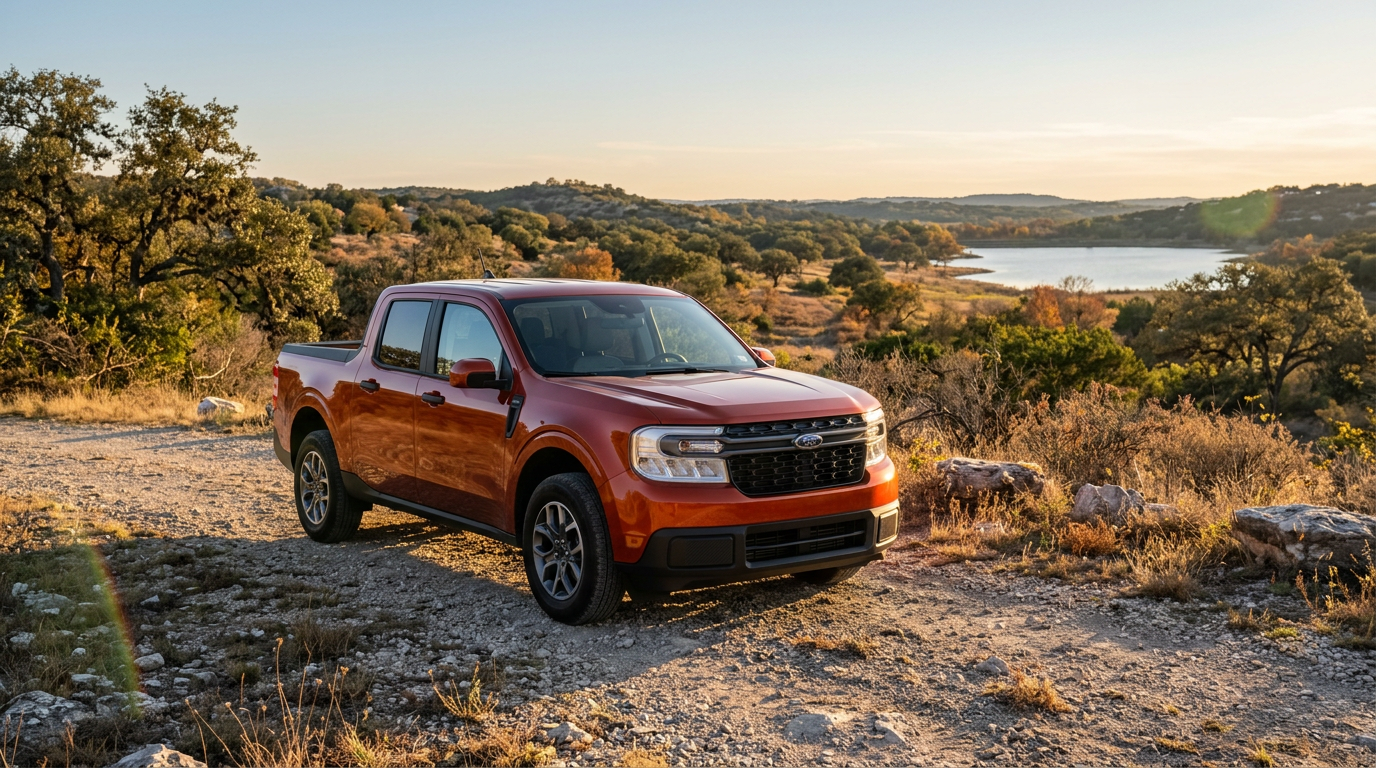
An orange Ford Maverick pickup truck parked on a rocky dirt path overlooking a lake during golden hour. (Representative image for illustration purposes only. Actual vehicle may vary based on trim and configuration.)

Peak Efficiency or Power: The Ultimate 2026 Ford Maverick Powertrain Showdown

Choosing between the 2.5L Hybrid and the 2.0L EcoBoost on the 2026 Ford Maverick comes down to your primary driving demands. Drivers seeking maximum fuel economy should select the 2.5L Hybrid with its power-split electronic continuously variable transmission (eCVT), delivering up to an EPA-estimated 42 mpg city. Buyers needing maximum towing capacity, high-speed passing power, or specialized off-road hardware should choose the 2.0L EcoBoost, which produces 250 hp and 280 lb-ft of torque paired with an 8-speed automatic transmission or a performance 7-speed automatic transmission on the Lobo trim. The 2026 Ford Maverick lineup redefines what compact pickups can accomplish, bringing distinct transmission architectures engineered for two entirely different driver profiles. The standard 2.5L Hybrid powertrain utilizes a power-split eCVT that combines a 2.5-liter Atkinson-cycle four-cylinder engine with electric motor-generators. This system produces a net 191 hp and 173 lb-ft of torque, focusing on smooth urban acceleration and class-leading city efficiency. For drivers carrying gear out toward Medina Lake or traversing the Hill Country terrain near Lakehills, choosing between the hybrid and turbo powertrains depends on whether your priority is max fuel efficiency or maximum towing capacity. For those requiring heavier capability, the optional 2.0L EcoBoost turbocharged four-cylinder engine elevates output to 250 hp and 280 lb-ft of torque. Standard EcoBoost models transmit power through a robust 8-speed automatic transmission that features torque-converter lockup for direct gear engagement under heavy acceleration. When equipped with the optional 4K Tow Package, the EcoBoost doubles the Maverick's standard 2,000-lb towing capacity to a maximum rating of 4,000 lbs, making it the clear choice for pulling campers, utility trailers, or watercraft. Experience both driving dynamics in person at Cecil Atkission Ford by finding our Hondo dealership showroom or giving our team a quick phone call to speak with our truck specialists. Table of Contents How Do the Maverick Hybrid eCVT and EcoBoost Transmissions Differ by Configuration? What Transmission Is in the 2026 Ford Maverick EcoBoost and Is All-Wheel Drive Standard? How Does the Ford Maverick Hybrid eCVT Work and Does It Have Belts or Chains? How Does City vs Highway Driving Impact Maverick Hybrid eCVT Efficiency? When Should Transmission Fluid Be Changed in a Ford Maverick EcoBoost? Frequently Asked Questions About 2026 Ford Maverick Transmissions Test-Drive the 2026 Ford Maverick Powertrains How Do the Maverick Hybrid eCVT and EcoBoost Transmissions Differ by Configuration? The 2026 Ford Maverick transmission options vary directly by trim level, engine choice, and drivetrain layout across the model lineup. The 2.5L Hybrid pairs exclusively with an electronic continuously variable transmission (eCVT) in both front-wheel drive and all-wheel drive configurations. The 2.0L EcoBoost pairs with an 8-speed automatic transmission on standard and Tremor trims, while the street-tuned Maverick Lobo uses a quick-shifting 7-speed automatic transmission equipped with steering-wheel-mounted paddle shifters. Ford structures the Maverick line to give truck buyers flexible mechanical pairings across five distinct trim levels: XL, XLT, Lariat, Lobo, and Tremor. On the XL, XLT, and Lariat trims, the standard 2.5L Hybrid delivers 191 hp and 173 lb-ft of torque through the eCVT. Front-wheel drive comes standard on the XL and XLT hybrid configurations, while all-wheel drive is available as an option across XL, XLT, and standard on the Lariat AWD hybrid. Selecting the 2.0L EcoBoost engine changes the transmission hardware completely. On standard XL, XLT, and off-road-focused Tremor 4WD models, the engine drives through an 8-speed automatic transmission engineered for high torque capacity and smooth shift intervals. The Tremor 4WD model adds a twin-clutch rear-drive unit with a differential lock feature for technical off-road traction. The performance-minded Maverick Lobo introduces a unique drivetrain build. Available in Lobo Standard 4WD and Lobo Premium 4WD trims, it pairs the 250 hp 2.0L EcoBoost with a specialized 7-speed automatic transmission adapted from European performance models. This quick-shift gearbox includes manual paddle-shifter control and a specialized torque-vectoring rear drive unit. Explore our new Ford Maverick lineup to find the precise trim configuration that matches your driving requirements. Engine & Performance Powertrain specs by trim Feature Lariat AWD Lobo Premium 4WD Lobo Standard 4WD Tremor 4WD XL AWD XL FWD Engine 2.5L 2L 2L 2L 2.5L 2.5L Horsepower 191 hp 250 hp 250 hp 250 hp 191 hp 191 hp Torque 173 lb-ft 277 lb-ft 277 lb-ft 277 lb-ft 173 lb-ft 173 lb-ft Transmission CVT automatic 7-speed automatic 7-speed automatic 8-speed CVT CVT Drivetrain All-wheel drive Four-wheel drive Four-wheel drive Four-wheel drive All-wheel drive Front-wheel drive Engine & Performance (continued) Feature XLT AWD XLT FWD Engine 2.5L 2.5L Horsepower 191 hp 191 hp Torque 173 lb-ft 173 lb-ft Transmission CVT CVT Drivetrain All-wheel drive Front-wheel drive What Transmission Is in the 2026 Ford Maverick EcoBoost and Is All-Wheel Drive Standard? The 2026 Ford Maverick EcoBoost utilizes a torque-converter 8-speed automatic transmission on standard models and a 7-speed automatic transmission on the Lobo performance trim. All-wheel drive is not standard on base EcoBoost configurations; front-wheel drive comes standard on entry-level EcoBoost models, while intelligent all-wheel drive is an available upgrade or standard equipment on higher-tier and performance trims. The core transmission powering the 2.0L EcoBoost engine is Ford's 8F35 8-speed automatic transmission. Designed specifically for transverse front-wheel-drive and all-wheel-drive applications, the 8-speed automatic uses planetary gearsets and hydraulic clutch packs to maintain optimal engine RPM across varying road speeds. A wide overall gear ratio spread ensures strong off-the-line launch torque in first gear while dropping highway engine speeds in eighth gear to optimize fuel economy. Drivetrain availability on the EcoBoost varies depending on the selected package and trim tier. While early model years linked the EcoBoost exclusively to all-wheel drive, the 2026 lineup allows buyers to pair the EcoBoost engine with front-wheel drive on select models for reduced weight and lower initial acquisition cost. Intelligent all-wheel drive remains available across the board, utilizing electro-hydraulic coupling to route torque to the rear wheels whenever front-wheel slip is detected. On specialized trims, all-wheel drive comes standard from the factory. The Tremor 4WD incorporates an advanced torque-on-demand four-wheel-drive system with a rear-drive unit capable of lockup for mud, sand, and loose gravel. The Maverick Lobo features a performance tuned four-wheel-drive setup paired with its 7-speed automatic transmission, delivering high-G cornering traction on pavement. Shoppers comparing new trucks against pre-owned options can inspect our pre-owned vehicle inventory to evaluate how previous-generation EcoBoost drivetrains compare on the road. How Does the Ford Maverick Hybrid eCVT Work and Does It Have Belts or Chains? The 2026 Ford Maverick Hybrid electronic continuously variable transmission (eCVT) operates using a durable power-split planetary gearset and two electric motor-generators without any friction belts, steel bands, or variable pulleys. Power from the 2.5L engine and the electric traction motor blends mechanically through the planetary gears, continuously adjusting gear ratios electronically to match speed and load demands seamlessly. Unlike conventional mechanical CVTs found in many compact passenger cars, the Maverick's eCVT contains zero push-belts or flexible drive chains that could stretch, slip, or wear out over time. Traditional CVTs rely on hydraulic pressure pushing steel belts between conical pulleys, creating friction points that require frequent maintenance and limit torque handling. Ford's power-split transaxle eliminates these friction elements entirely, replacing them with fixed mesh planetary gears that offer lifetime mechanical durability under demanding truck duties. The mechanical interaction inside the power-split eCVT relies on three main rotational components: a sun gear, planetary carrier gears, and a ring gear: The 2.5L Atkinson-cycle engine connects directly to the planetary gear carrier. Electric Motor-Generator 1 (MG1) connects to the center sun gear, acting as a generator and controlling overall ratio changes electronically. Electric Motor-Generator 2 (MG2) connects to the outer ring gear, providing electric drive torque directly to the differential and driving the wheels. Because MG1 can vary its rotational speed and direction electronically, it continuously alters the leverage applied to the planetary gearset. This allows the system to vary drive ratios seamlessly from a complete stop up to highway cruising speeds without physical gear shifts. Buyers evaluating financing choices for a new hybrid truck can start by applying for online credit pre-approval before visiting the dealership floor. How Does City vs Highway Driving Impact Maverick Hybrid eCVT Efficiency? City driving maximizes the efficiency of the 2026 Ford Maverick Hybrid eCVT, yielding an EPA-estimated 42 mpg city on front-wheel-drive models and 40 mpg city on all-wheel-drive models. In contrast, highway driving relies more heavily on the continuous output of the internal combustion engine, resulting in 35 mpg highway on front-wheel-drive hybrid models and 34 mpg highway on all-wheel-drive hybrid models. Stop-and-go urban driving environment provides the ideal operational environment for the hybrid transaxle. During low-speed city travel, frequent braking events allow the secondary electric motor (MG2) to act as a generator, capturing kinetic energy and storing it inside the 1.1-kWh lithium-ion battery. When accelerating from red lights or creeping through traffic, the power-split eCVT can drive the vehicle solely on electric power or blend battery power with minimal engine engagement, driving fuel consumption down significantly. On open highways, the efficiency dynamic shifts toward the internal combustion engine. At sustained high speeds, electric propulsion plays a smaller role because kinetic regeneration opportunities are infrequent, and continuous high-speed movement requires constant torque output from the 2.5L gas engine. Even on the highway, however, the eCVT maintains efficiency by continuously fine-tuning the planetary gear ratio to keep the engine operating in its sweet spot. By comparison, the 2.0L EcoBoost engine achieves higher relative efficiency during highway cruising than in heavy city stop-and-go traffic: XL FWD / XLT FWD Hybrid: 42 mpg city / 35 mpg highway / 38 mpg combined XL AWD / XLT AWD Hybrid: 40 mpg city / 34 mpg highway / 37 mpg combined Lariat AWD Hybrid: 39 mpg city / 32 mpg highway / 36 mpg combined Lobo Standard / Premium 4WD EcoBoost: 21 mpg city / 30 mpg highway / 24 mpg combined Tremor 4WD EcoBoost: 21 mpg city / 27 mpg highway / 23 mpg combined Maintaining peak powertrain efficiency over the life of your truck requires proper air filtration and fluid quality; local owners can maintain their vehicles by ordering genuine OEM Ford parts directly through our service counter. Fuel Economy Fuel economy and range by trim Trim MPG Lariat AWD 39 city / 32 hwy / 36 combined Lobo Premium 4WD 21 city / 30 hwy / 24 combined Lobo Standard 4WD 21 city / 30 hwy / 24 combined Tremor 4WD 21 city / 27 hwy / 23 combined XL AWD 40 city / 34 hwy / 37 combined XL FWD 42 city / 35 hwy / 38 combined XLT AWD 40 city / 34 hwy / 37 combined XLT FWD 42 city / 35 hwy / 38 combined When Should Transmission Fluid Be Changed in a Ford Maverick EcoBoost? The 2026 Ford Maverick EcoBoost's transmission fluid requires attention at specific intervals: inspection at 30,000 miles and replacement at 150,000 miles with Mercon ULV fluid. However, under severe operating conditions—such as frequent towing near the 4,000-lb max towing capacity, hauling heavy loads, off-roading, or driving in high ambient summer temperatures—Ford technicians recommend changing the transmission fluid every 30,000 to 60,000 miles. The 8F35 8-speed automatic transmission in the Maverick EcoBoost operates under intense mechanical shear forces and thermal stress. The unit utilizes ultra-low viscosity Mercon ULV fluid, which provides low fluid resistance to optimize fuel economy. Over time, heat cycles generated during heavy acceleration or trailering can break down the fluid's protective additive package, reducing its ability to lubricate internal clutch packs and planetary gear bearings effectively. Hauling tools and agricultural supplies across the dirt roads around Dunlay qualifies as severe duty, making early fluid service essential for long-term transaxle reliability. Driving patterns that warrant moving up to the severe maintenance schedule include: Regularly pulling trailers or carrying maximum payload capacity in the bed. Extensive idling or frequent stop-and-go driving in high outdoor temperatures. Driving in dusty, unpaved rural areas or rugged off-road environments. Navigating steep, continuous mountain grades or hill country roads. Changing the Mercon ULV fluid at 30,000 to 60,000-mile intervals flushes out microscopic metal wear particles and restores thermal stability to the hydraulic control valve body. Drivers who require extreme hauling muscle beyond compact truck capabilities can explore our inventory of new Ford heavy-duty commercial trucks to handle heavy commercial workloads. Frequently Asked Questions About 2026 Ford Maverick Transmissions Q: Does the 2026 Ford Maverick Hybrid eCVT require special transmission fluid? Yes, the power-split eCVT in the 2026 Ford Maverick Hybrid requires Motorcraft Mercon ULV automatic transmission fluid, the same ultra-low viscosity fluid specification used in the EcoBoost 8-speed automatic transmission. Even though the hybrid transaxle uses planetary gearsets rather than hydraulic clutches for gear shifts, the fluid is vital for cooling the electric motor-generators and lubricating the internal gearing. Ford recommends inspecting the fluid level during regular maintenance and replacing it at 150,000 miles under normal operation or 30,000 miles under severe duty. Q: Can the 2026 Ford Maverick Hybrid tow up to 4,000 pounds with the eCVT? No, the 2026 Ford Maverick Hybrid with the eCVT has a maximum towing capacity of 2,000 lbs across all trim levels, regardless of whether you choose front-wheel drive or all-wheel drive. The 4K Tow Package, which increases maximum towing capacity to 4,000 lbs, is exclusively available on models equipped with the 2.0L EcoBoost engine and the 8-speed automatic transmission. Buyers planning to pull heavy campers, ski boats, or tandem-axle trailers should select the EcoBoost powertrain. Q: Does the 2026 Ford Maverick EcoBoost offer paddle shifters on all trims? No, steering-wheel-mounted paddle shifters are not equipped on standard EcoBoost models with the 8-speed automatic transmission. Manual gear selection via paddle shifters is exclusive to performance and off-road configurations, specifically the Maverick Lobo with its quick-shifting 7-speed automatic transmission and the Tremor model. Standard EcoBoost trims utilize Ford's rotary gear shift dial with a Low (L) mode or Tow/Haul drive mode to manage shift points under load. Q: Is all-wheel drive available on the 2026 Ford Maverick Hybrid? Yes, all-wheel drive is available on the 2026 Ford Maverick Hybrid. Ford expanded hybrid availability to include an electronic all-wheel-drive system across the XL, XLT, and Lariat trims. The hybrid AWD system pairs the 2.5L engine and eCVT with a mechanical drive shaft and rear axle differential, delivering 191 hp and enhanced foul weather traction while maintaining impressive fuel economy rated up to an EPA-estimated 40 mpg city. Q: What driving conditions qualify as severe duty for Maverick EcoBoost transmission maintenance? Ford defines severe duty operation as driving in dusty or sandy environments, frequent towing or hauling near maximum gross vehicle weight ratings, extended idling, driving in sustained hot weather, or navigating steep grades regularly. If your daily routine includes these conditions, mechanics advise shortening the 8-speed automatic transmission fluid change interval from the standard 150,000-mile mark down to every 30,000 to 60,000 miles to protect the internal clutches and transaxle bearings. Test-Drive the 2026 Ford Maverick Powertrains Experience the distinction between the smooth efficiency of the 2.5L Hybrid eCVT and the response of the 2.0L EcoBoost 8-speed automatic in person. Our team at Cecil Atkission Ford in Hondo, Texas, is ready to walk you through trim configurations, tow packages, and drivetrain options to ensure you drive home in the exact truck built for your lifestyle. Plan your visit today by getting directions to our dealership or giving our sales team a quick phone call to reserve your test drive. © 2026 Cecil Atkission Ford. All rights reserved. Vehicle specification data © JATO Dynamics Limited.